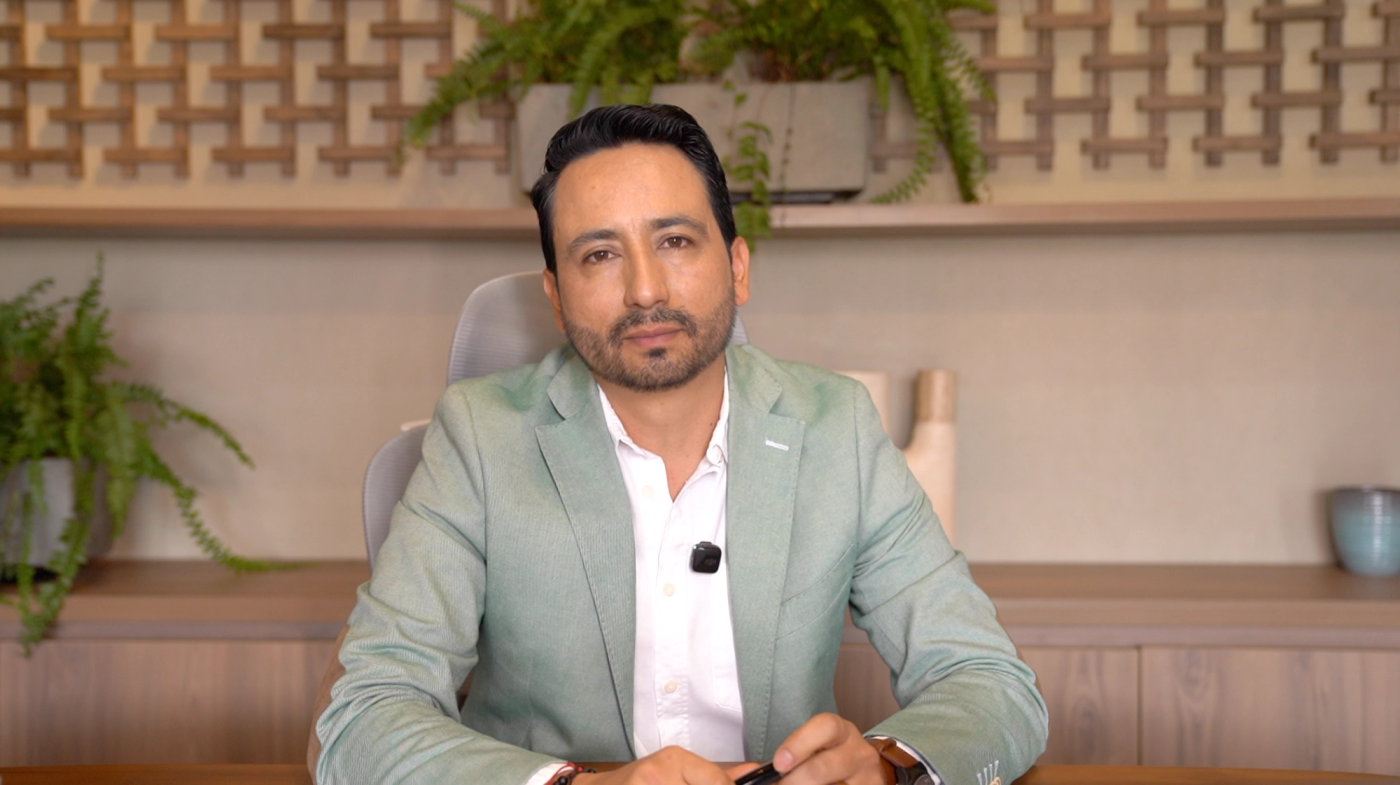
How Housing is Changing in Quito: Smart Living, Investment, and Boutique Projects with César Chamorro
The real estate market in Quito is evolving towards projects that prioritize experience, technology, nature, and new forms of investment. In conversation with Booster Prop, César Chamorro, director of Place & Home, analyzes the growth of Cumbayá and Tumbaco, the concept of Smart Living, and the changes that are redefining housing in the Ecuadorian capital.
The real estate market in Quito is undergoing a transformation. For César Chamorro, director of Place & Home, today's buyer is no longer just looking for square footage: they expect security, green areas, technology, common spaces, and an experience that better fits their lifestyle. After more than a decade and over 12 developed projects, the company has witnessed firsthand how these priorities have evolved.One of the central concepts of this transformation is Smart Living. For Place & Home, it does not simply mean incorporating technology into a home, but using it to enhance quality of life: controlling access, reinforcing security, optimizing energy consumption, and managing spaces more efficiently. In this sense, technology ceases to be an amenity and becomes a functional tool.Cumbayá and Tumbaco: housing and investmentThe expansion into Cumbayá, Tumbaco, and Puembo is a significant part of Place & Home's strategy. According to Chamorro, there are still growth opportunities in the valleys, driven by the combination of nature, services, commerce, and connectivity.In Cumbayá, the company also identifies a segment strongly oriented towards real estate investment. Some of their products start at approximately USD 60,000 and there are configurations designed to generate income, such as units with independent spaces that can be used for rental.
This approach also redefines what a 'premium' project means. For Chamorro, it should not only be about expensive finishes: location, concept, and the ability to generate value for the buyer are fundamental.
From mass projects to boutique developmentPlace & Home is betting on smaller-scale projects with a more defined identity. During the interview, Chamorro highlighted a boutique development of 24 units that reached around 85% sales in less than three months, located next to a wooded area.Projects like LUM aim to create an experience around concepts such as earth, air, fire, and water, while TAO draws inspiration from a Thai resort and incorporates a pool, pickleball, coworking, and various social spaces.
Behind these proposals is a clear trend: amenities can no longer just be a list in a brochure. They must respond to how the target audience wants to live for each project.
Sustainability and real estate innovation
Sustainability is also beginning to have a more concrete impact on new developments. Place & Home works with systems focused on water savings and treatment, recirculation, and consumption reduction, in addition to certifications in their recent projects.
However, Chamorro believes that the Ecuadorian real estate sector still has a long way to go in terms of innovation. Consumer habits can change every three to six months, while construction processes advance at a much slower pace.This gap represents one of the main challenges for builders in Quito: developing properties today that can respond to how people will want to live tomorrow.The conversation leaves an idea that summarizes the evolution of the sector: the future of real estate in Quito will not depend solely on building more square meters, but on creating better experiences. Technology, nature, sustainability, flexibility, and investment are beginning to form part of a single value proposition.
En Cumbayá, además, la empresa identifica un segmento fuertemente orientado hacia la inversión inmobiliaria. Algunos de sus productos parten desde aproximadamente USD 60.000 y existen configuraciones pensadas para generar ingresos, como unidades con espacios independientes que pueden utilizarse para alquiler.
Este enfoque también redefine qué significa un proyecto “premium”. Para Chamorro, no debería tratarse únicamente de acabados costosos: la ubicación, el concepto y la capacidad de generar valor para el comprador son fundamentales.
Del proyecto masivo al desarrollo boutique
Place & Home está apostando por proyectos de menor escala y con una identidad más definida. Durante la entrevista, Chamorro destacó un desarrollo boutique de 24 unidades que alcanzó alrededor del 85% de ventas en menos de tres meses, ubicado junto a un entorno boscoso.
Proyectos como LUM buscan construir una experiencia alrededor de conceptos como tierra, aire, fuego y agua, mientras que TAO toma inspiración de un resort tailandés e incorpora piscina, pickleball, coworking y diferentes espacios sociales.
Detrás de estas propuestas aparece una tendencia clara: los amenities ya no pueden ser simplemente una lista dentro de un brochure. Deben responder a cómo quiere vivir el público al que está dirigido cada proyecto.
Sostenibilidad e innovación inmobiliaria
La sostenibilidad también comienza a tener un impacto más concreto en los nuevos desarrollos. Place & Home trabaja con sistemas orientados al ahorro y tratamiento de agua, recirculación y reducción del consumo, además de certificaciones en sus proyectos recientes.
Chamorro considera, sin embargo, que al sector inmobiliario ecuatoriano todavía le queda camino por recorrer en innovación. Los hábitos del consumidor pueden cambiar cada tres o seis meses, mientras que los procesos de construcción avanzan a un ritmo mucho más lento.
Ese desfase representa uno de los principales desafíos para las constructoras de Quito: desarrollar hoy propiedades capaces de responder a la forma en que las personas querrán vivir mañana.
La conversación deja una idea que resume la evolución del sector: el futuro del Real Estate en Quito no dependerá únicamente de construir más metros cuadrados, sino de crear mejores experiencias. Tecnología, naturaleza, sostenibilidad, flexibilidad e inversión comienzan a formar parte de una misma propuesta de valor.