Better Living in Quito: UMBAU's Vision of German Quality and the Future of Real Estate
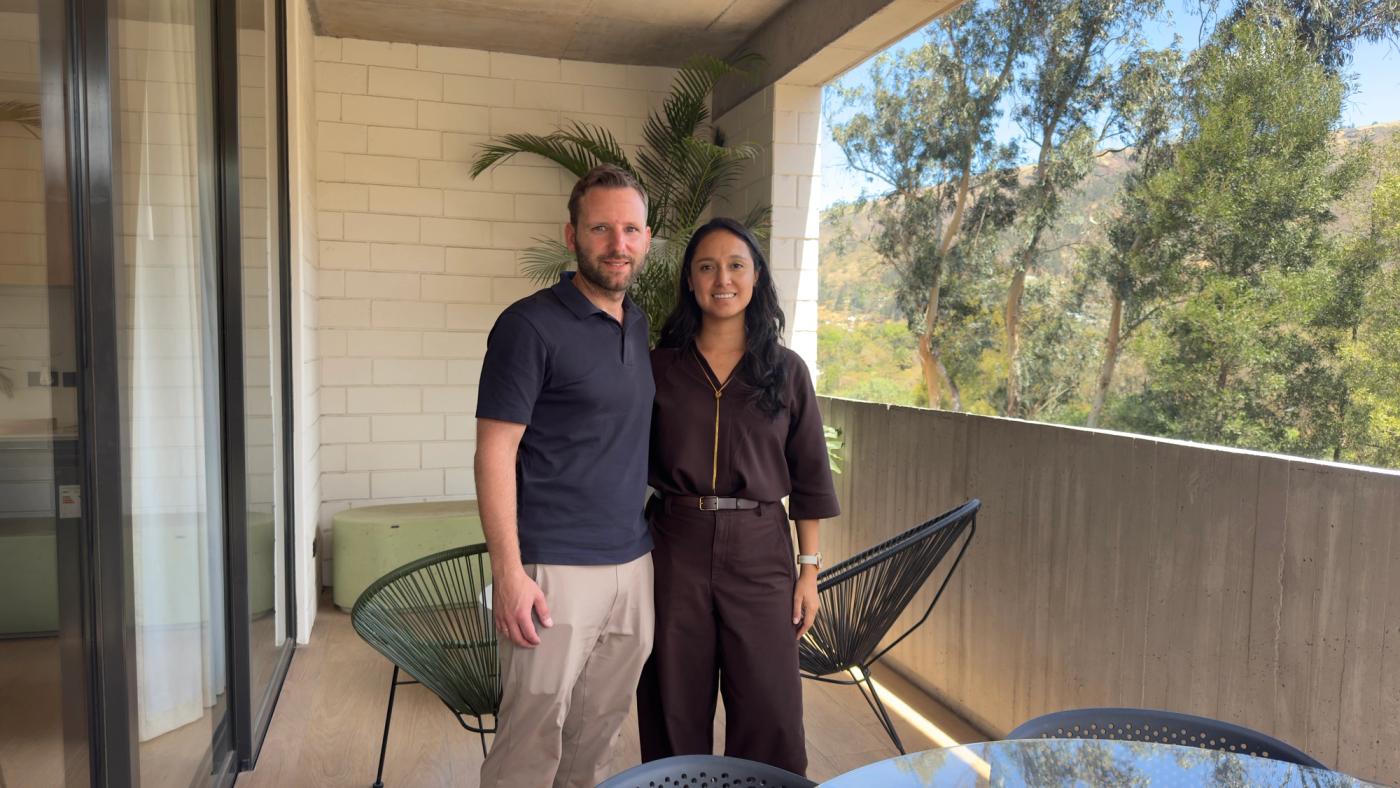
What happens when a real estate development stops being thought of solely in terms of the building and starts to look at the city? In this conversation with María José Encalada and Levin Wehrenfennig, founders of UMBAU, we explore the philosophy behind the developer, the real meaning of building with 'German quality,' and a new generation of projects that seeks to connect housing, community, and urban space in Quito.
For years, the real estate industry has learned to describe a property based on square meters, location, finishes, and amenities. But the conversation with María José Encalada and Levin Wehrenfennig, founders of UMBAU, raises a more interesting question: what if instead of designing just buildings, we start designing better ways to inhabit the city?This shift in perspective is central to UMBAU's philosophy. The firm was founded in Quito with the intention of integrating contemporary architecture, sustainability, and community, understanding each project as a piece that must relate to the urban fabric surrounding it.What does 'German quality' really mean?One of the concepts that most identifies UMBAU is its reference to 'German quality.' But behind the phrase lies a vision that goes beyond using better materials.
María José studied Architecture at the Universidad San Francisco de Quito and later completed a Master of Science at the Universität Stuttgart, Germany. That experience helps explain a philosophy where planning, functionality, and technical detail play a central role. Currently, María José is the CEO of UMBAU and Levin is the Creative Director.
Quality, then, should not only be evident when the buyer observes a finish. It is also in what is often unseen: how a project is planned, how spaces function, how materials age, and how coherent each design decision is.
For the real estate market in Quito, this distinction is becoming increasingly important. In an industry where practically all projects are presented as 'premium,' the real differentiator is starting to be the ability to demonstrate what lies behind that promise.
Parkside: when the environment is also part of the property
Parkside, in Cumbayá, exemplifies this way of thinking. Its proposal incorporates terraces, gardens, natural lighting, cross ventilation, and a direct relationship with a protected forest at the foot of Ilaló.
The project also integrates solar panels to support the consumption of communal areas, infrastructure for electric vehicles, and water treatment for reuse in irrigation.The real estate reading is interesting: it is becoming increasingly difficult to separate the value of a home from the experience that exists around it.You no longer just buy an apartment.
You also buy light, landscape, mobility, nature, community, and the way all those elements will accompany daily life.
The ground floor also builds the cityAnother of the most interesting points of the conversation was the relationship between real estate projects and the street.For decades, many buildings were developed almost as independent objects: inwardly they could offer excellent apartments, but outwardly they contributed little to the urban experience.
Rethinking the ground floor precisely involves questioning that logic.
Commercial spaces, public areas, meeting spots, and complementary uses can make a project not only function for those who live inside but also generate activity and improve its relationship with the environment.There, real estate development stops being just construction and begins to become small-scale urbanism.Quartier and the idea of concentrating daily life
This philosophy finds a new expression in Quartier, a mixed-use development that combines housing, offices, and commercial spaces in the Cumbayá and Ruta Viva area.
The name itself refers to the idea of 'district,' while the project incorporates everything from apartments and offices to a pool, sauna, gym, coworking space, podcast room, and meeting areas. Its marketing also emphasizes the construction of German quality and a way of life where different activities can coexist within the same environment.
Behind the amenities lies a much more relevant urban discussion: how much of our life should depend on the car and long commutes?
Mixed-use projects seek to bring housing, work, commerce, and leisure closer together. They do not eliminate the mobility problems of a city, but they do introduce a different way of thinking about development.
The future of real estate in Quito is not just about building more
The conversation with María José and Levin leaves an idea that is particularly relevant for the real estate market in Quito.Innovating does not necessarily mean adding more technology, more amenities, or increasingly eye-catching designs.
It can also mean asking better questions:
How does a building relate to the street?
How do we make better use of space?
How do we reduce consumption?
How do we design places where we really want to stay?
And what will that project contribute to the city in twenty years?
UMBAU presents its answer through a particular combination of technical precision, architectural sensitivity, and a search for community.
And perhaps therein lies one of the most important conversations that Ecuadorian real estate must have today: moving from thinking solely about how much we can build to asking ourselves how we want to inhabit Quito.luz, paisaje, movilidad, naturaleza, comunidad y la forma en que todos esos elementos acompañarán la vida cotidiana.
La planta baja también construye ciudad
Otro de los puntos más interesantes de la conversación fue la relación entre los proyectos inmobiliarios y la calle.
Durante décadas, muchos edificios se desarrollaron casi como objetos independientes: hacia adentro podían ofrecer excelentes departamentos, pero hacia afuera aportaban poco a la experiencia urbana.
Repensar la planta baja implica justamente cuestionar esa lógica.
Locales, espacios públicos, áreas de encuentro y usos complementarios pueden hacer que un proyecto no solamente funcione para quienes viven dentro, sino que genere actividad y mejore la relación con su entorno.
Ahí el desarrollo inmobiliario deja de ser únicamente construcción y empieza a convertirse en urbanismo a pequeña escala.
Quartier y la idea de concentrar la vida cotidiana
Esta filosofía encuentra una nueva expresión en Quartier, un desarrollo de uso mixto que combina vivienda, oficinas y espacios comerciales en la zona de Cumbayá y Ruta Viva.
El propio nombre hace referencia a la idea de “distrito”, mientras que el proyecto incorpora desde apartamentos y oficinas hasta piscina, sauna, gimnasio, coworking, podcast room y espacios de encuentro. Su comercialización también pone énfasis en la construcción de calidad alemana y en una forma de vida donde distintas actividades puedan convivir dentro de un mismo entorno.
Detrás de los amenities existe una discusión urbana mucho más relevante: ¿cuánto de nuestra vida debería depender del automóvil y de desplazamientos largos?
Los proyectos mixtos buscan acercar vivienda, trabajo, comercio y ocio. No eliminan los problemas de movilidad de una ciudad, pero sí introducen una manera diferente de pensar el desarrollo.
El futuro inmobiliario de Quito no se trata solo de construir más
La conversación con María José y Levin deja una idea que resulta especialmente relevante para el mercado inmobiliario de Quito.
Innovar no necesariamente significa agregar más tecnología, más amenities o diseños cada vez más llamativos.
También puede significar hacer preguntas mejores:
¿Cómo se relaciona un edificio con la calle?
¿Cómo aprovechamos mejor el espacio?
¿Cómo reducimos consumos?
¿Cómo diseñamos lugares donde realmente queramos permanecer?
¿Y qué aportará ese proyecto a la ciudad dentro de veinte años?
UMBAU plantea su respuesta desde una combinación particular de precisión técnica, sensibilidad arquitectónica y búsqueda de comunidad.
Y quizás ahí esté una de las conversaciones más importantes que debe tener hoy el Real Estate ecuatoriano: pasar de pensar únicamente en cuánto podemos construir a preguntarnos cómo queremos habitar Quito.