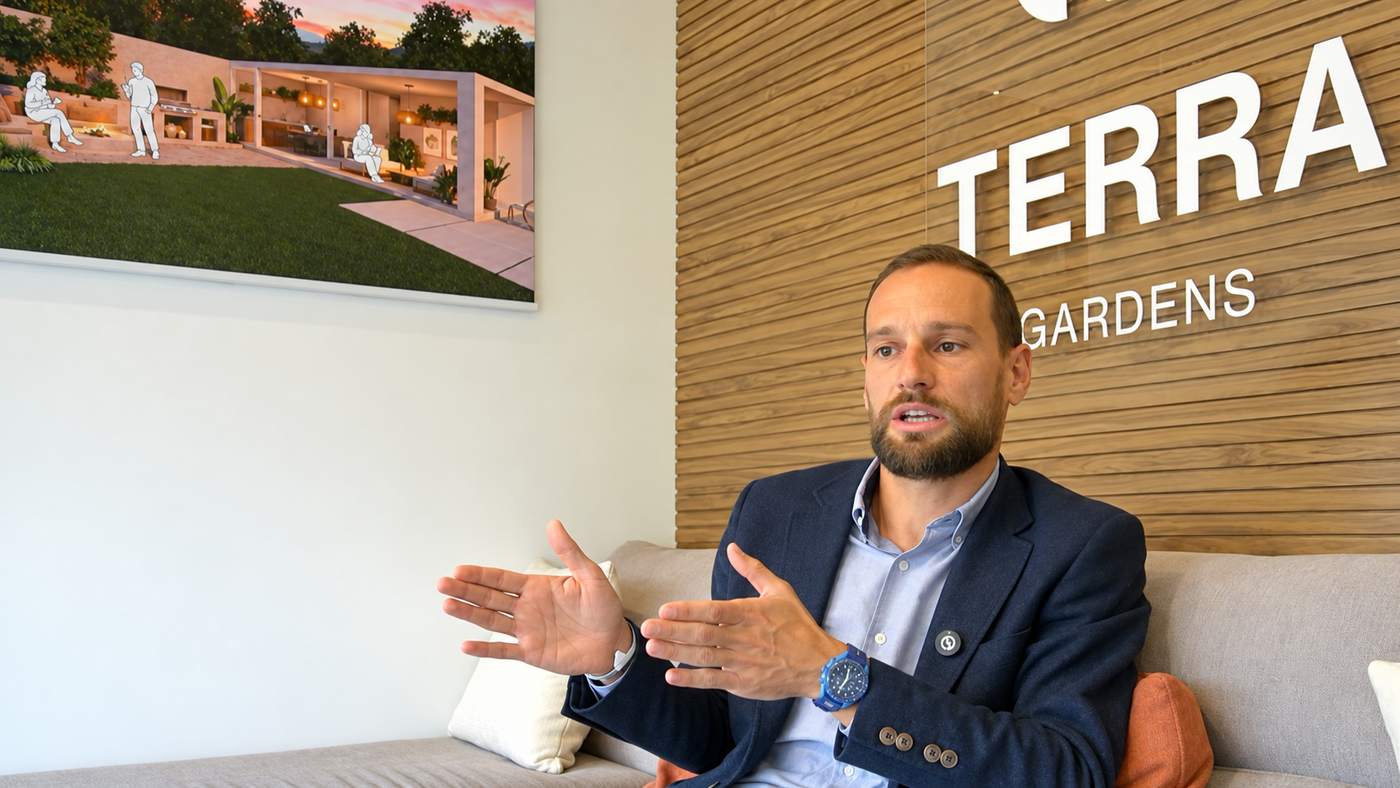
Pifo as a Real Estate Opportunity: Arthur Pommarede, Gerzacol, and the New Residential Map of Quito
Pifo is starting to take on a more significant role within the real estate landscape of Quito. In conversation with Booster Prop, Arthur Pommarede, commercial director of Gerzacol, discusses access to housing, the impact of new mortgage loans, and the development of projects like Buganvilla Gardens and Terra Gardens in an area that aims to establish itself as a new residential alternative to the east of the city.
Pifo is beginning to enter the real estate conversation in Quito.
For years, when discussing real estate growth towards the valleys of Quito, the conversation primarily focused on Cumbayá and Tumbaco. Today, the map is starting to expand.Pifo combines proximity to Tumbaco, Puembo, and the Mariscal Sucre International Airport with a residential offer that still caters to budgets different from those of the more established areas of the valleys. At the same time, Quito's urban expansion continues to move towards rural and peri-urban areas, a phenomenon that the Metropolitan Plan itself recognizes as one of the city's major planning challenges.This scenario is the starting point of our conversation with Arthur Pommarede, commercial director of Gerzacol: a French economist residing in Ecuador who became directly involved in the development and marketing of housing in Quito. His background offers a unique perspective on a market where location, financing, and price remain crucial, but where the efficiency of construction and its connection to a family's real purchasing power is becoming increasingly important.
Gerzacol: Housing and Construction EfficiencyGerzacol has developed residential projects in Quito and its surroundings for several years, covering areas like Calderón, Conocoto, and now Pifo. Its public portfolio includes developments such as Casa Real, Jardines de Mirasierra, Jardín Andaluz, Jardines de la Colina, Jardines de las Acacias, and Buganvilla Gardens.
One of its differentiators lies in its construction system based on reinforced concrete panels, developed as an alternative to the traditional system. The company presents it as a tool to improve competitiveness and efficiency in construction.And here emerges one of the central themes of the interview: in affordable housing, innovating does not necessarily mean filling a property with technology. It can also mean reducing construction times, controlling costs, and developing a product that fits within the financial capabilities of the buyer.Buganvilla Gardens: VIP Housing in Pifo
Buganvilla Gardens clearly represents that strategy.
The project includes 18 social interest homes in Pifo. In January 2026, the Ecuador Development Bank reported financing of USD 550,000 for its construction and highlighted the use of a construction system aimed at optimizing time and improving process efficiency.The proposal includes three-bedroom houses and outdoor spaces, within a residential format primarily designed for families seeking to access homeownership. The project currently appears within the formal real estate offerings in Pifo and is marketed on sector portals starting at around USD 79,900, subject to availability and current conditions.But Buganvilla also allows for understanding something more important than an individual project: the development of Pifo is closely related to access to credit.
Credicasa Can Change Purchasing PowerIn 2026, financing once again became one of the most important variables in the Ecuadorian real estate market.The Credicasa program from BIESS offers a preferential rate of 2.99% for housing under its eligibility conditions. For amounts up to USD 65,000, BIESS has even communicated financing of up to 100% and terms of up to 30 years.
As of August 2026, the program had already disbursed over 1,030 loans totaling USD 53.69 million, of which 214 corresponded to Pichincha.This is particularly important for areas like Pifo.When a mortgage rate significantly reduces the monthly payment, it not only changes how a home is financed. It changes who can become a buyer.
And that can modify the demand in areas where the entry price still allows for housing development within the ranges that these programs accommodate.
Terra Gardens and the Next Phase of Nuevo PifoAfter Buganvilla Gardens, Gerzacol is moving forward with Terra Gardens, presented as a new residential development in Nuevo Pifo. The launch has been accompanied by sector players like Constructores Positivos, who identify the project as part of the new investments being developed in the area.
The importance of Terra Gardens goes beyond adding another set of houses.It shows the continuity of a commitment.Gerzacol is no longer testing Pifo with an isolated project: it is building a strategy around the sector.And here arises the most interesting question from the perspective of real estate investment: Can Pifo follow the path of Tumbaco?Directly comparing Pifo with Cumbayá or Tumbaco would oversimplify the market.
These are areas with different levels of consolidation, supply, and prices.
But there is a recognizable dynamic: when connectivity, services, and residential offerings improve, certain areas begin to attract new homes and investment.The Ruta Viva remains one of the essential infrastructures to connect Quito with its valleys and the airport. The Municipality reports tens of thousands of vehicles daily and is currently carrying out rehabilitation work on this artery.
In parallel, a recent study by the City Research Institute confirms that the northeastern valleys already concentrate some of the highest residential values in Quito, especially in Cumbayá, Nayón, Puembo, and Tumbaco.
This generates a natural consequence: buyers who do not find a suitable alternative in the more consolidated areas begin to look a little further away.
Pifo then enters the radar.Buying in Pifo: Looking Beyond the PriceHowever, just because an area is growing does not mean that any property is automatically a good investment.The buyer should analyze at least four variables:Connectivity: how long it really takes to reach daily activities.
Financing: whether the property qualifies for programs like VIS, VIP, or Credicasa and under what conditions.Developer: track record, delivered projects, and construction quality.Future environment: services, infrastructure, and new developments planned around.
The real estate opportunity does not simply appear because an area is cheaper than another.
It appears when price, product, financing, and urban development begin to align.Arthur Pommarede and a Different Perspective on Housing in Ecuador
Arthur Pommarede's experience adds another dimension to the conversation.
Born in France, trained as an economist, and residing in Quito, his profile combines a financial perspective with direct experience in real estate development. He is currently involved in Gerzacol projects like Buganvilla Gardens and participates in the company's commercial expansion.
This allows the interview to move beyond the traditional discourse of 'buying a house' and enter a broader discussion: how do we make it possible for more people to actually buy one?Price, architecture, construction system, and marketing matter.But without a financial structure that connects the product with a family's real income, the market does not function.Pifo can become an important piece of the next residential cycle.Pifo is still not Cumbayá or Tumbaco.
And that may be part of its appeal.
While some areas of the valleys already show prices typical of consolidated markets, Pifo retains space to develop housing aimed at segments that need a different relationship between price, size, and financing.
Buganvilla Gardens represents the first part of that thesis.
Terra Gardens seeks to continue it.
And programs like Credicasa can become the catalyst that connects this new offer with buyers who previously faced greater difficulties in accessing housing.
The conversation with Arthur Pommarede leaves an open question for the real estate market in Quito: Are we looking at Pifo for what it is today or for what it can become in the coming years?
For buyers, developers, and investors, understanding that difference may be much more important than trying to guess what the 'next trendy area' will be.
Pero sí existe una dinámica reconocible: cuando mejoran la conectividad, los servicios y la oferta residencial, determinadas zonas empiezan a atraer nuevos hogares e inversión.
La Ruta Viva sigue siendo una de las infraestructuras esenciales para conectar Quito con sus valles y el aeropuerto. El Municipio reporta decenas de miles de vehículos diarios y actualmente ejecuta trabajos de rehabilitación sobre esta arteria.
En paralelo, un estudio reciente del Instituto de Investigaciones de la Ciudad confirma que los valles nororientales ya concentran algunos de los valores residenciales más altos de Quito, especialmente en Cumbayá, Nayón, Puembo y Tumbaco.
Eso genera una consecuencia natural: compradores que no encuentran una alternativa adecuada en las zonas más consolidadas comienzan a mirar un poco más lejos.
Pifo entra entonces en el radar.
Comprar en Pifo: mirar más allá del precio
Sin embargo, que una zona esté creciendo no significa que cualquier propiedad sea automáticamente una buena inversión.
El comprador debería analizar al menos cuatro variables:
Conectividad: cuánto tarda realmente en llegar a sus actividades diarias.
Financiamiento: si la propiedad califica para programas como VIS, VIP o Credicasa y bajo qué condiciones.
Desarrollador: trayectoria, proyectos entregados y calidad constructiva.
Entorno futuro: servicios, infraestructura y nuevos desarrollos previstos alrededor.
La oportunidad inmobiliaria no aparece simplemente porque una zona sea más económica que otra.
Aparece cuando precio, producto, financiamiento y desarrollo urbano empiezan a alinearse.
Arthur Pommarede y una mirada diferente sobre vivienda en Ecuador
La experiencia de Arthur Pommarede agrega otra dimensión a la conversación.
Nacido en Francia, formado como economista y radicado en Quito, su perfil combina una mirada financiera con experiencia directa en desarrollo inmobiliario. Actualmente está vinculado a proyectos de Gerzacol como Buganvilla Gardens y participa en la expansión comercial de la compañía.
Eso permite que la entrevista salga del discurso tradicional de “comprar una casa” y entre en una discusión más amplia: ¿cómo hacemos que más personas realmente puedan comprarla?
Precio, arquitectura, sistema constructivo y comercialización importan.
Pero sin una estructura financiera que conecte el producto con el ingreso real de una familia, el mercado no funciona.
Pifo puede convertirse en una pieza importante del próximo ciclo residencial
Pifo todavía no es Cumbayá ni Tumbaco.
Y justamente ahí puede estar parte de su atractivo.
Mientras algunas zonas de los valles ya muestran precios propios de mercados consolidados, Pifo conserva espacio para desarrollar vivienda dirigida a segmentos que necesitan una relación distinta entre precio, tamaño y financiamiento.
Buganvilla Gardens representa la primera parte de esa tesis.
Terra Gardens busca continuarla.
Y programas como Credicasa pueden convertirse en el catalizador que conecte esa nueva oferta con compradores que antes tenían mayores dificultades para acceder a una vivienda.
La conversación con Arthur Pommarede deja entonces una pregunta abierta para el mercado inmobiliario de Quito: ¿Estamos mirando Pifo por lo que es hoy o por lo que puede convertirse en los próximos años?
Para compradores, desarrolladores e inversionistas, entender esa diferencia puede ser mucho más importante que intentar adivinar cuál será “la próxima zona de moda”.